
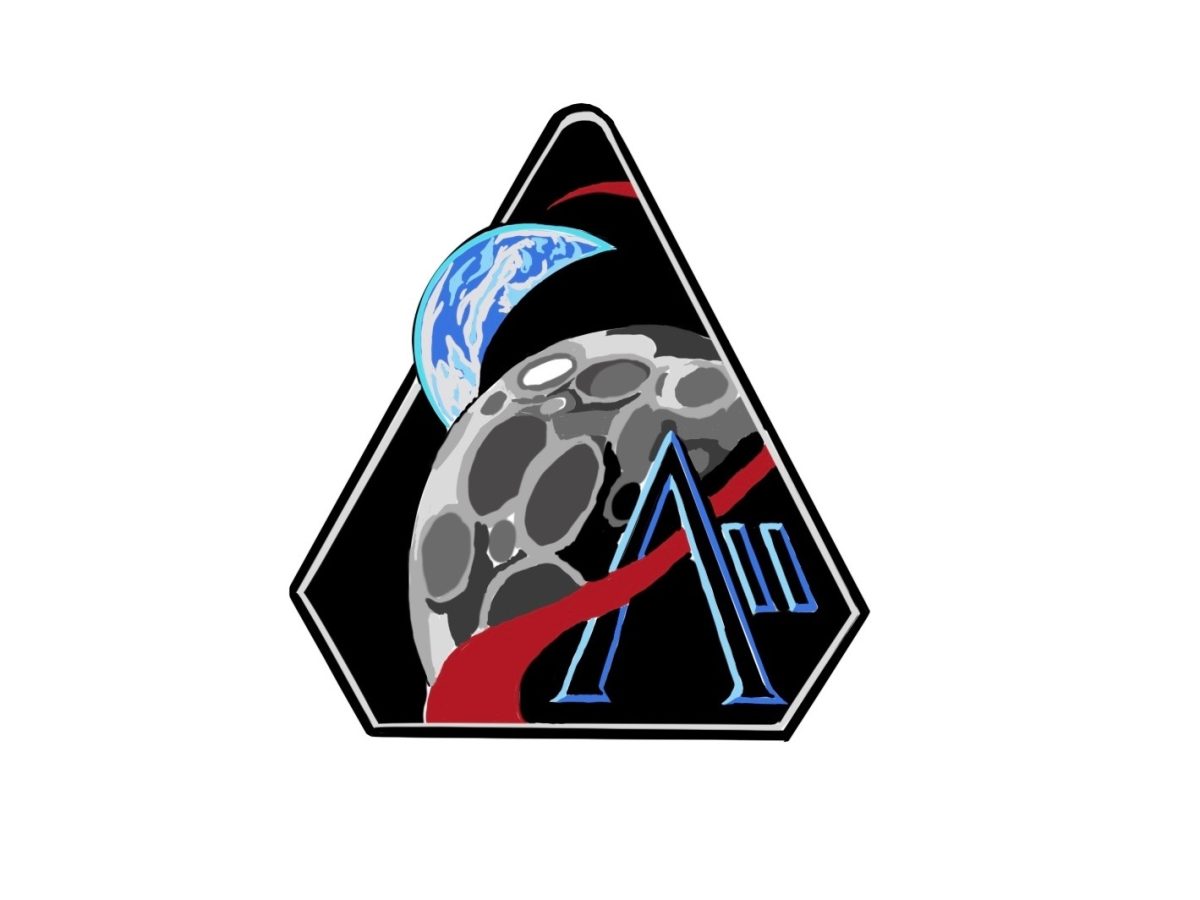
On April 2, 2026, the engineering class gathered in Room 104 of Claremont High School to watch the launch of the Artemis II mission. For these prospective engineers, many with dreams of working at NASA in aerospace and mechanical roles, the first moments of a mission to the moon were more than just a technical marvel to behold. It was proof of the limitless potential they had to explore the cosmos in the coming years. Indeed, Artemis II heralded a new age of space exploration, one that Room 104 and the world outside it should be excited for.
To contextualize, the Artemis II mission marked the first time in 54 years that the National Aeronautics and Space Administration (NASA) has sent a manned mission to the moon and back. A mix of the “astronomical” $300 billion needed to fund moon missions and shifting priorities to low-Earth orbit missions caused NASA to discontinue the Apollo program in 1972. Decades later, a reinvigorated interest in deep space exploration combined with advances in the spacecraft and launch system technology needed for it allowed those efforts to continue under the Artemis program at a sustainable price and pace. The wait has been well worth it; over 10 days in deep space, the Artemis II mission traveled over 695,000 miles and reached a maximum distance of almost 253,000 miles from Earth, eclipsing the previous records set by the Apollo 13 mission. During that time, mission commander Reid Wiseman led his four-person crew in testing their Orion capsule to ensure that it could operate in a deep space environment for future missions to the moon and beyond.
Artemis II represents a critical continuation of NASA’s exploration, but it is also a mission of many firsts. Crewmembers Victor Glover and Christina Koch were the first African-American and first female astronauts, respectively, to reach deep space, setting a precedent for diversity in engineering as NASA continues to expand its opportunities for people from all walks of life looking to help explore the wider cosmos. Crewmember Jeremy Hansen also made history as the first non-American to reach deep space—his presence on Artemis II solidified a deal between NASA and the Canadian Space Agency to collaborate on the Gateway, an outpost orbiting the moon that will employ Canadian robotics to facilitate lunar exploration in future stages of the Artemis program. This mission even marks one of the first times space exploration has been truly bipartisan; while current President Trump formalized the Artemis program through 2017’s Space Policy Directive One, it was former President Obama who signed 2010’s NASA Authorization Act, which allowed NASA to develop the Orion capsule and Space Launch System rocket used for the first time on the Artemis II mission. The very existence of this mission, despite racial, gendered, ethnic, and political divides, serves as a testament to the possibility of mankind’s continued collaborative future among the stars.
The excitement at a future beyond the Earth was not relegated to Room 104 of Claremont High School on the fateful day that Artemis II blasted off. Across the country, a new generation of engineers has been inspired to help take the next step. Across the aisle, political figureheads can finally agree on a step to take for the collective good. Across the world, people have hope for the first time in over half a century that the world they share will not be the end of their legacy.