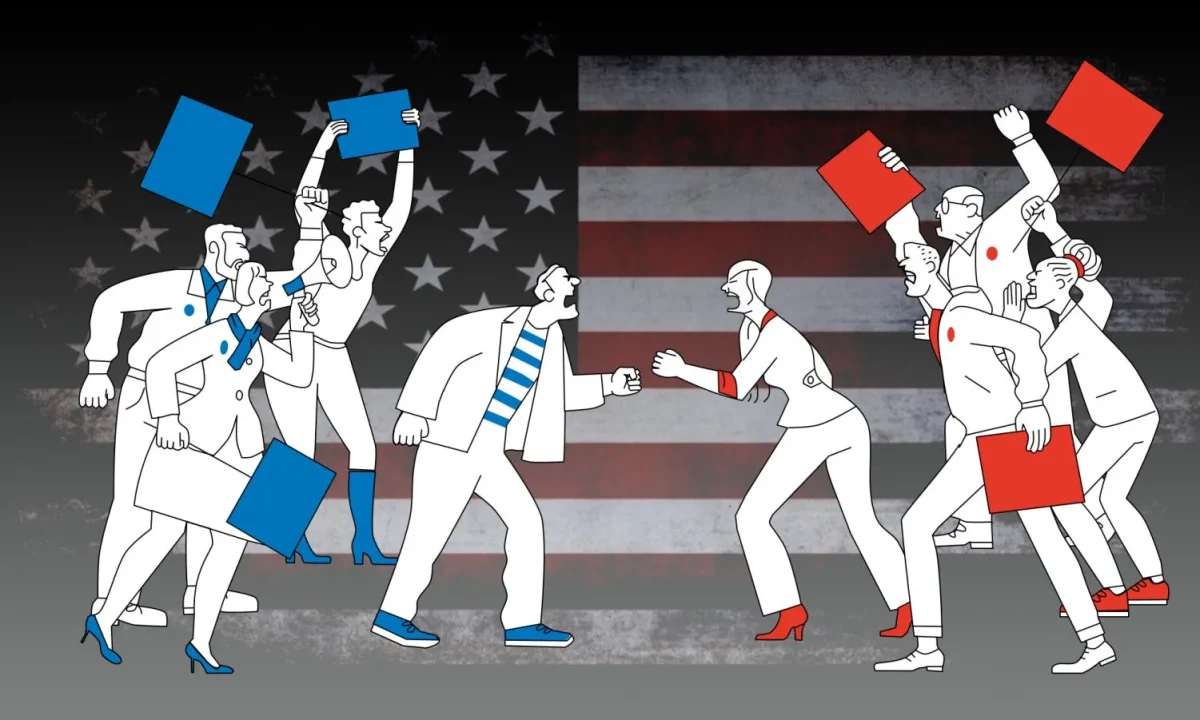

Rule one of throwing a temper tantrum that every toddler in the candy aisle of the grocery store knows: do not back down until you get what you want. Government shutdowns are Congress’s equivalent of a tantrum. It can be an excellent strategy when funding negotiations have reached an impasse, just as long as politicians actually stand their ground. Unfortunately, that is far from what happened this year.
Reaching 43 days, the 2025 government shutdown was the longest in U.S. history. Disrupting everything from Supplemental Nutrition Assistance Program (SNAP) benefits to cancelling flights, the shutdown was ended by a Senate vote of 60-40 on Wednesday, November 12. Though the new government funding bill is an extensive 328 pages of legislative text, the actual deal is a short-term solution, only in place until January of 2026. The bill is limited to reversing the mass layoffs of federal workers, funding most government agencies through January 30, and reimbursing states for federal expenses they incurred during the shutdown. The bill did nothing to extend the Affordable Care Act (ACA) subsidies that were a primary point of discussion. The ACA, often referred to as “Obamacare”, was passed during the Obama administration in 2010 and aimed to make health insurance more affordable on a large scale; it also significantly expanded the coverage of Medicaid. The Act was widely considered a success for reaching said goals, but Congressional Republicans feel the estimated $100 billion the ACA costs the government could be better allocated elsewhere.
Claremont High School’s psychology and economics teacher, Octavio Hernandez, shares his thoughts about the new funding bill.
“I just want people to have access to healthcare,” Hernandez said. “I want people who are working for the government to be compensated. […] I’m glad that they funded it for some time, but I feel in some ways disappointed that people didn’t hold out to be able to have an actual resolution. I want a bill that’s going to fund our economy in a way that is fair and just to the taxpayers of our country. Right now, it’s kind of a Band-Aid.”
Although the deal ultimately gave them few wins, the Democrats were in a politically advantageous position at the beginning of the shutdown. This was primarily because of President Donald Trump’s actions and the public perception of them. While more than 40 million Americans had their food stamps frozen, President Trump was bulldozing the East Wing of the White House to build a ballroom and throwing Great Gatsby-themed parties at Mar-a-Lago. An October NBC poll showed that the majority of voters blamed Congressional Republicans for the shutdown, and a CNN poll displayed Trump’s approval ratings in the 30s for the first time in his second term.
Despite Trump and the Republican Party refusing to negotiate the ACA tax credits and seeing their approval ratings go down because of it, the Democrats folded. This is because the Democrats who endorsed this bill were primarily moderates or independents who caucused with the Democratic Party, like Senators Angus King and Maggie Hassan. These politicians felt that the shutdown strategy was ineffective and the negotiations were stagnant; most of them did not want the shutdown to begin with. As a result of the deal they cut—or rather, what deals they failed to cut—millions of Americans will see their health premiums increase by more than 20% in 2026.
Many Democrats feel that this event relates to a larger disconnect between voters and the party. According to the Pew Research Center, “Two-thirds of Democrats say the Democratic Party makes them feel frustrated, up from 48% who said the same in 2021.” If Democrat politicians hope to regain trust in their voters and create momentum, they must learn how to make strategic decisions and avoid backing down when fighting back against Trump and the GOP.