
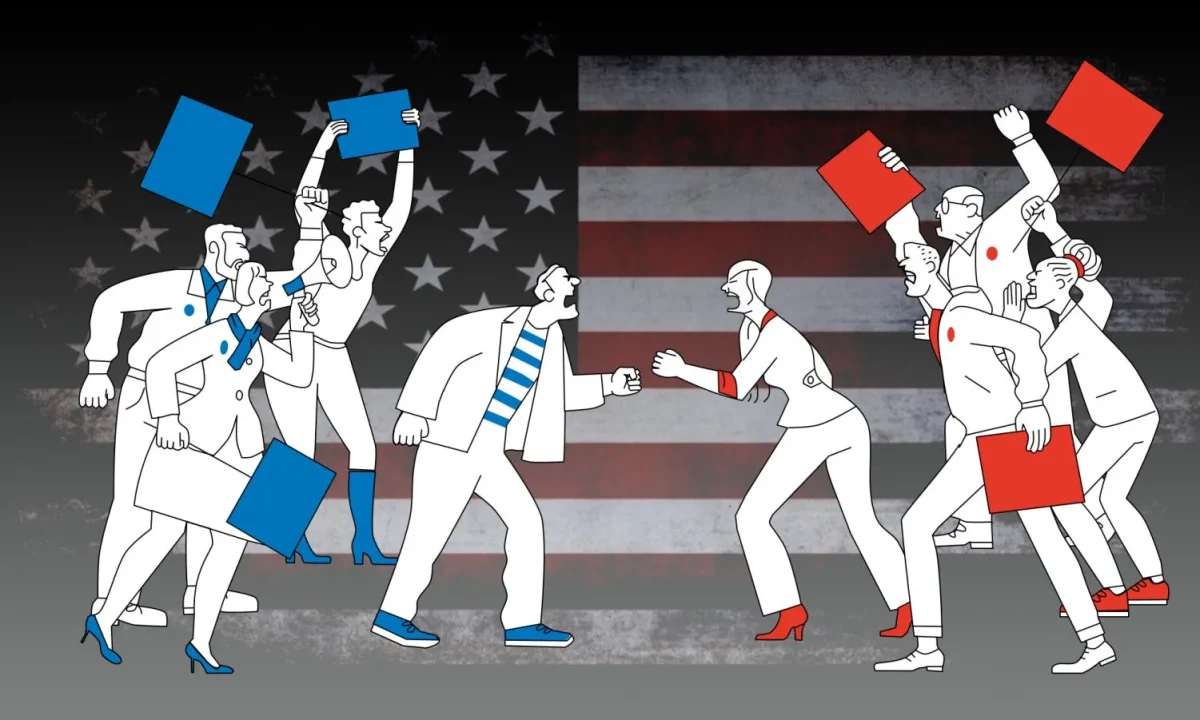
It feels like everywhere you go—social media, school, even group chats—politics have turned into something personal. Instead of talking about ideas or new advocacies, people attack each other just for having a different opinion. Political disagreement becomes dangerous when people stop debating ideas and start attacking each other personally, because it increases polarization, weakens productive discussion, and turns activism into hostility instead of change.
Somewhere along the line, disagreeing with someone politically stopped being about policy and started being about people. Now, if someone supports a different party, they are not just “wrong,” they are labeled ignorant, immoral, or even dangerous.
The reality is that people do not choose a political party for no reason. They align with one another because they believe in certain values, whether it be the economy, education, or social issues. However, instead of trying to understand those values, we have turned politics into a competition of who can insult the other side better.
Criticizing political candidates is completely fair—it is part of living in a democracy. Nonetheless, there is a clear difference between criticizing a politician and attacking the people who support them. Too often, political discussion turns into ad hominem attacks, a logical fallacy where someone targets a person’s character instead of addressing their actual argument or beliefs. Rather than debating policies on healthcare, education, or the economy, people dismiss others as ignorant, immoral, or dangerous simply because of who they voted for. This shifts the conversation away from real issues and turns politics into personal hostility instead of productive debate.
Calling Biden “Sleepy Joe” or Trump “orange” may be part of modern political culture, but it should not become the only form of political disagreement. Reducing every discussion to insults weakens real debate about policy and leadership. More importantly, those attacks should never extend to ordinary Democratic or Republican voters who are not personally responsible for the actions of the candidate they supported during election season. Protests that claim to defend democracy often lose purpose when targeting everyday Republicans or Democrats instead of actual political leaders. Supporting a candidate does not mean agreeing with every decision they make, and treating voters like they are at fault only deepens division instead of solving fundamental issues within this country.
The uncomfortable truth is that this is not just a politician’s problem, it is a citizen’s problem. We like to blame leaders for polarization, but regular people are the ones choosing to escalate it. Social media rewards extreme opinions, and Gen Z is right in the middle of it. Influencers and political commentators like Charlie Kirk on the right or Hasan Piker on the left build massive audiences by being as bold, and sometimes as divisive, as possible. Their clips go viral not because they bring people together, but because they spark outrage. On platforms like TikTok and Instagram, the algorithm pushes the loudest, most extreme takes to the top. People would rather go viral than be reasonable. It is easier to post something aggressive than to have a real conversation, so we keep pushing further apart and then act surprised when nothing gets solved.
By the way we act now, you would think voting automatically defines your entire character. Newsflash: it does not! People are more nuanced than that. What is even worse is when political tension turns into real-world hostility. Protests are meant to challenge those in power, not to intimidate or attack random citizens. Rallies should not end in violence between people who just happen to vote differently. That is not activism, that is failure on our part.
If we keep going in this direction, we are not just disagreeing; we are dividing ourselves beyond repair. You do not have to agree with someone’s opinions but treating them like the enemy just because they vote differently does not make you right; it makes the situation worse. If we actually care about fixing anything, we need to start by changing how we act. Criticize leaders. Debate ideas. But stop turning politics into a personal attack.
Because right now, the biggest threat to unity is not one party or one politician.
It is us.