
“We’re making a movie, not hundreds of millions of dollars of therapy.”
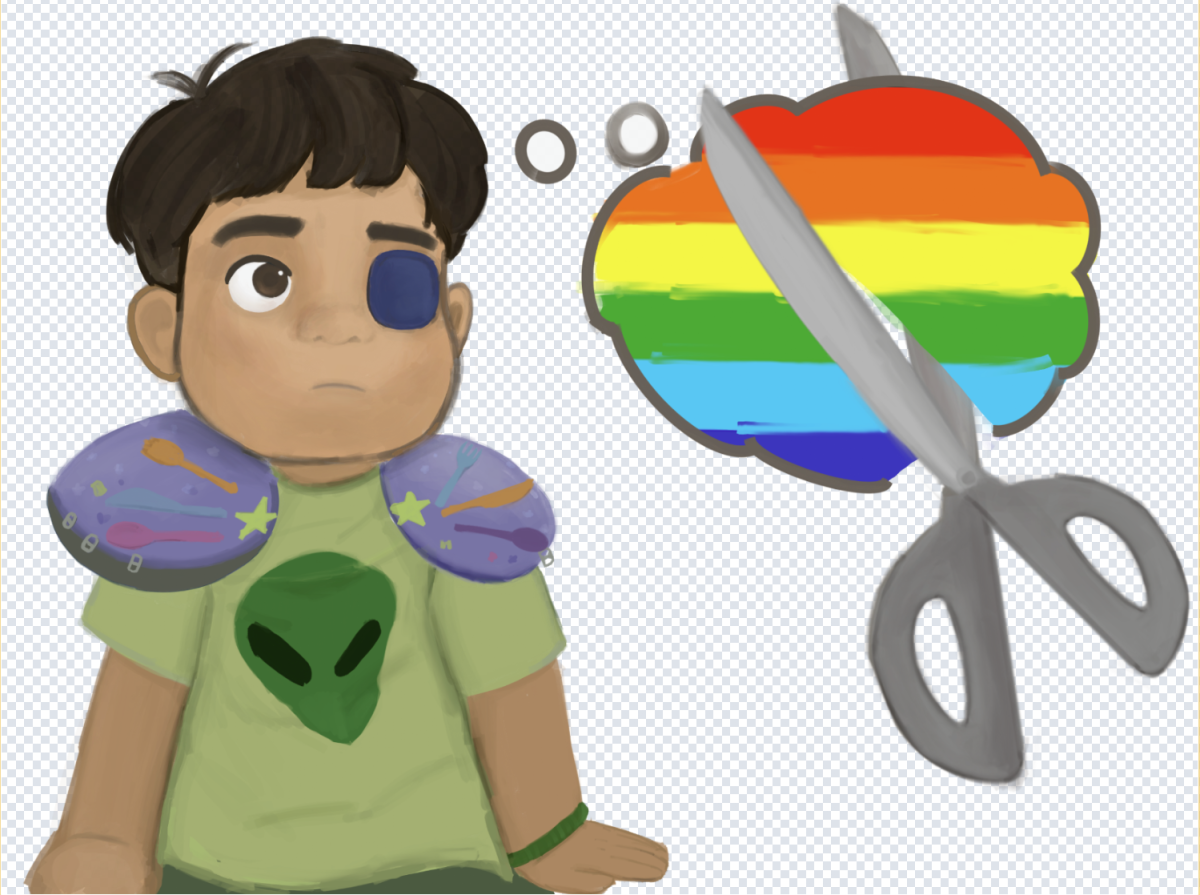
This was Pixar CEO Pete Docter’s response to the backlash that followed the studio’s decision to cut a gay storyline from its film “Elio.” In early versions of the movie, the title character was shown dreaming of raising a child with his male crush. Pixar cited reasons like making Elio more “universally relatable,” but outrage persisted, and Docter’s comment only added fuel to the fire.
Pixar has a long history of controversy related to LGBTQ+ representation. Until 2020, there was no unambiguous inclusion, although a scene in “Finding Dory” (2016) of two women pushing a stroller sparked speculation, and the same was true of “Toy Story 4” (2019), with two mothers hugging their child in front of a school. Then, in March of 2020, Pixar’s “Onward” featured a female character mentioning her girlfriend, the first time an LGBTQ+ relationship was confirmed in a Pixar feature film, and in May of 2020, the studio released the short film titled “Out” about a gay man struggling to come out to his parents. While these were considered major steps for Pixar, “Onward” was a box office failure. Though its flop was primarily attributed to the start of the COVID-19 pandemic, some armchair critics blamed the inclusive dialogue.
The tension worsened with the release of “Lightyear” in 2022. “Lightyear” depicted Alisha Hawthorne, one of the main characters, sharing a kiss with her wife–the first same-sex kiss in all of Pixar’s movies. It was, at one point, removed after Florida passed the Parental Rights in Education Act, commonly known as the Don’t Say Gay bill, but was reinstated after employee protests. Just like Onward, Lightyear flopped at the box office, and once again, its LGBTQ+ storylines were blamed.
Claremont High School freshman Vivianne Karaiscos shares her thoughts on inclusive representation in the media.
“I feel like LGBTQIA+ representation has come a long way in the last few years, but it is still very forced,” Karaiscos said. “Like characters can’t just be gay, the being gay [thing] has to be the whole plot line, coming out and struggling with rejection, internalized homophobia, et cetera. There needs to be more casual LGBTQIA+ representation where a character is just gay or transgender or nonbinary, same as where straight people are just straight, and there’s a plot outside of that character’s sexuality. It gives the LGBTQIA+ community a bad rep[utation] because it makes it seem like all they talk about is their sexuality, but a good portion of it is from the media, where that’s all the story focuses on, even though queer people have lives outside their sexuality.”
Pixar has repeatedly failed at efforts to display representation in its media. So until meaningful inclusion of LGBTQ+ communities is showcased, viewers will continue to feel unseen.